Text de prezentare a autorului/biroului în limba engleză
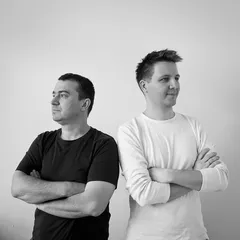
Studio Fragment Ltd. is a Budapest based architecture office founded by architects Imre Bődi and Zsolt Frikker in 2014, after several years of cooperation and experience with various architectural formations. Design competitions are of particular importance in the establishment of the firm and in their subsequent work. The success of these competitions is due in large part to the ÉME Master School, which is based on the cooperation with generations of architects. In their work, particular attention is paid to a thorough understanding of the architectural context, both at cultural and social level. Their architectural thinking is fundamentally shaped by their understanding of the concepts of place and continuity. Whatever we build has a physical or spiritual antecedent, whether it is a landscape setting, an existing building or an urban element, or a spiritual link to the past. For us, the most important question is how to balance the relationship with place and the past with today's modern architecture.
Descrierea proiectului în limba engleză
„Sol omnibus lucet”
(„The Sun shines for all”)
Semmelweis University is a leading institution of higher education in Hungary and the Central European region within the area of medicine and health sciences. In 2016 the Faculty of Health Sciences launched a design competition for an extension to a locally listed educational building dated from the early 1900’s. The aim was to create seminar rooms, demonstration rooms and 2 large lecture halls. The open competition was won by Studio Fragment.
The site stretches between two streets in the so-called „palace quarter” of Budapest. The neighborhood contains palace style maisons, important cultural and educational institutions mainly built in 19th and early 20th century.
Concept
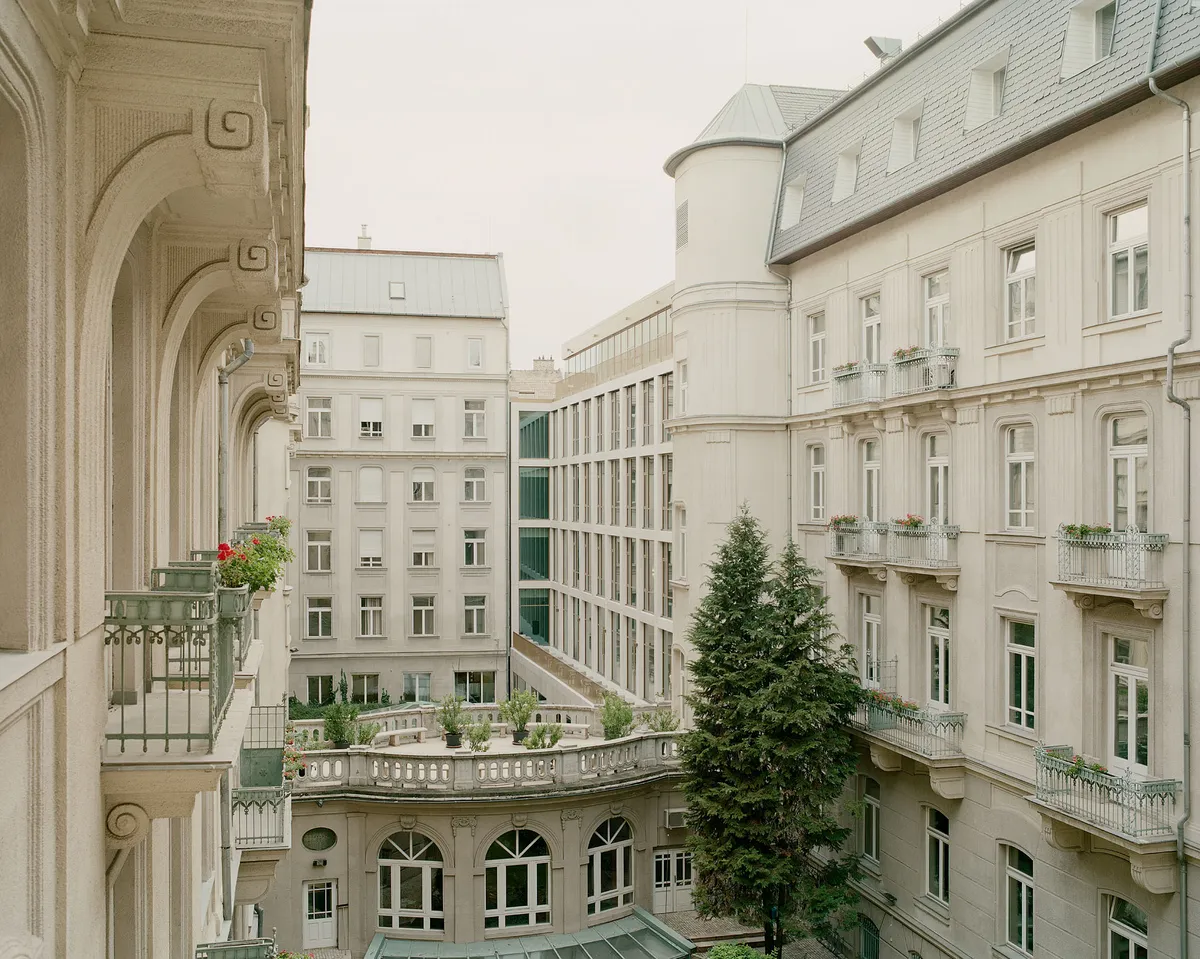
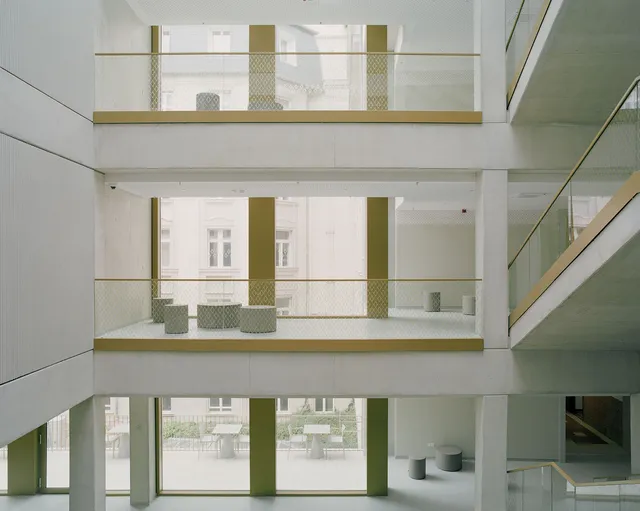
According to the main design concept the new volume and the existing building form one coherent complex. The basic design principles are based on the dialogue with the existing building and have been developed from it. The addition creates a completed inner courtyard. The two buildings are connected on every levels and the interior spaces are organized by a central atrium which is the main spatial element of the new wing. The atrium is a modern repetition of the old one. Community spaces surround the atrium and visual connection to the inner courtyard is created on each level that gives an airy feeling of the interior.
Facade
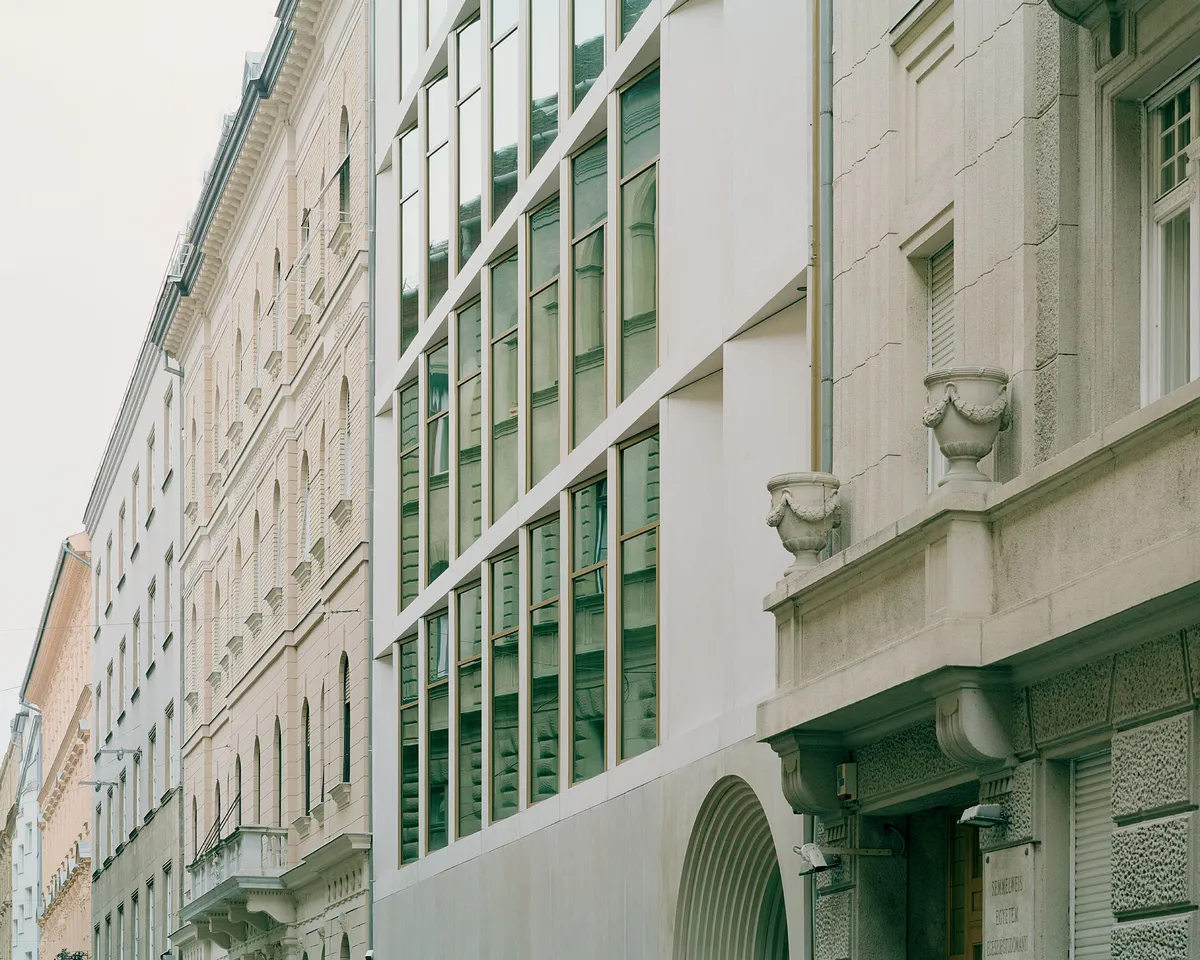
The building follows and captures the strong axiality and characteristic rhythm of the facades of the buildings in the neighbourhood. Due to the narrow street the main facade can be seen only by side.
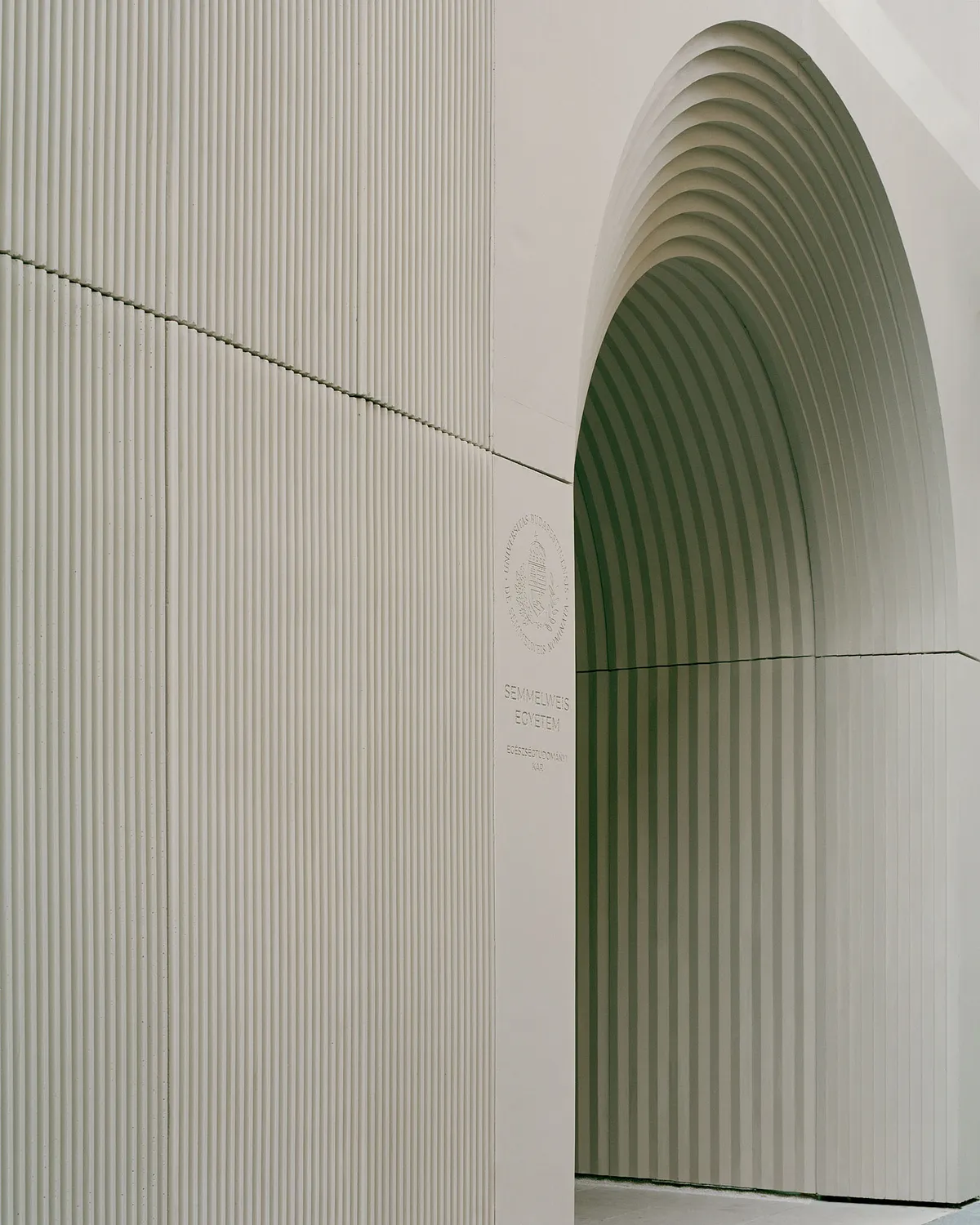
So the zig-zag geometry evokes the shadow effects of historic buildings and gives the building a two-faced appearance in the narrow street. The combination of smooth and textured precast concrete elements articulates the facade that colourmatches to the existing building. On both the street and courtyard facade the grid is an abstraction which follows the building's own structure and subtly responds to the existing building’s scheme.
Interior
Light and neutral materials were used in the internal circulation spaces and communal spaces such as white terrazzo, in-situ concrete, structured wall panels and white perforated gypsum ceilings that give fresh and clean look to the spaces. In the lecture halls, refined acoustic panels with different patterns and oak finish increase the acoustic experience.