1/4
2/4
3/4
4/4
Photography
Author(s) / Team representatives
Iulia Dana Băceanu
Website
Descrierea proiectului în limba engleză
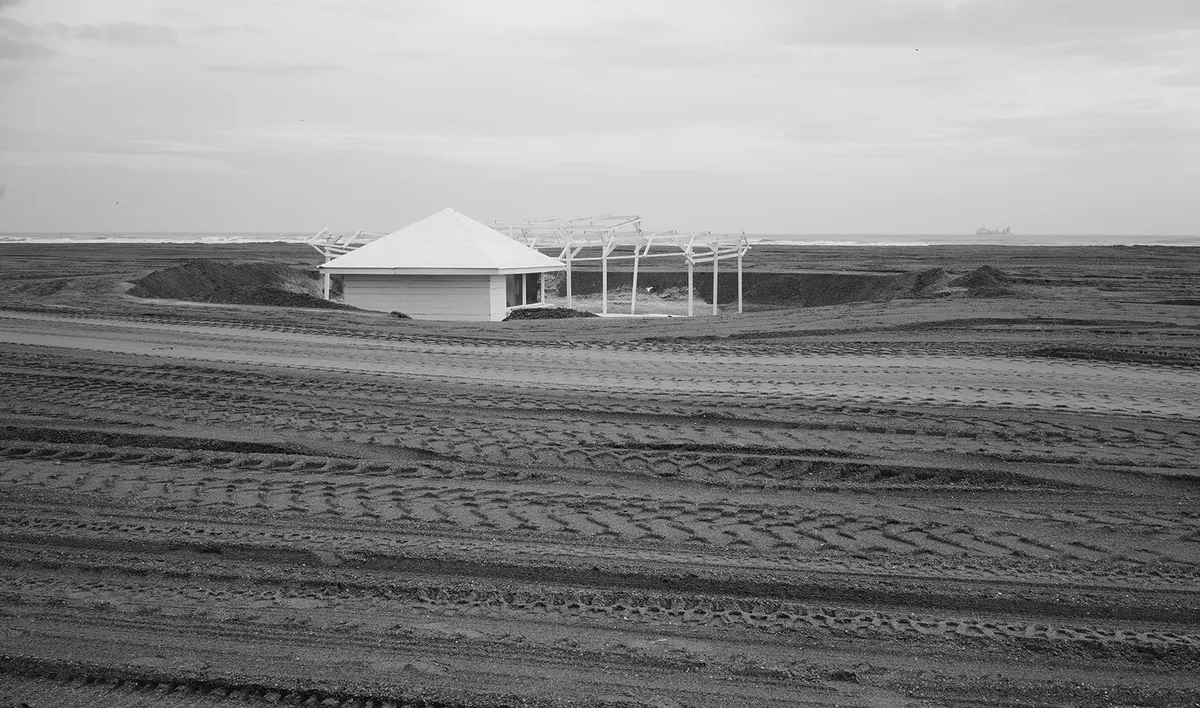
Following two centuries of momentum and progress a small fishers village is radically transformed. Just like a fully closed cycle, the settlement bearing a motherly name is reworked into a royal resort, then into a fertile ground on which to experiment urban principles and to express a new architectural language, specific to the communist regime. After the revolution, privatization and the unlimited right to ownership brought new freedoms and abruptly denied the paradigm of past urbanistic directions, producing an overuse of territory. In the spirit of a commercial vernacular this culminated with a never before seen densification that covered indiscriminately alleys and lakes, forests and lawns, boardwalks and beaches. After the pandemic imposed new distancing measures, the destructive effects of chaotic urbanization and overpopulation became the main rivals of the resort. The beach replenishing strategy, the topography altering of the sea edge, the sensation of a never ending worksite and the high prices in contrast to the quality of the services determined the tourists to abruptly withdraw, turning the place back to the stillness from which all had begun.
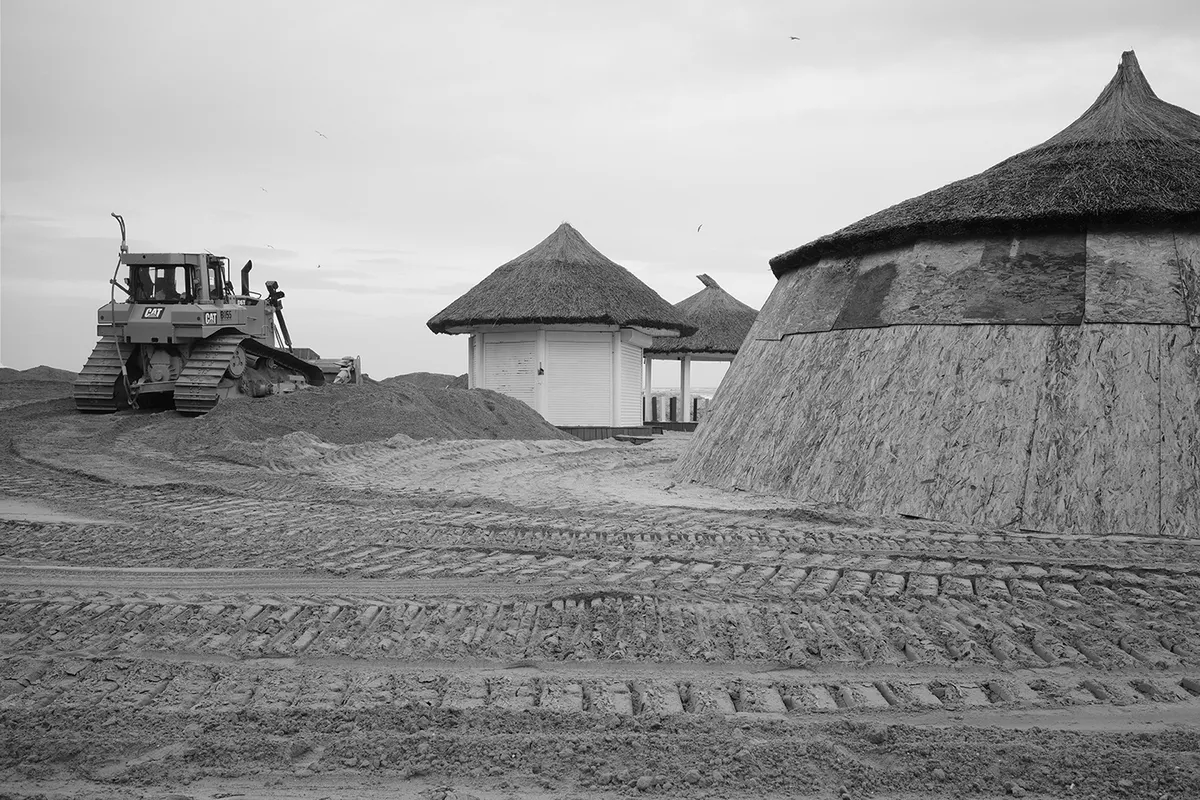
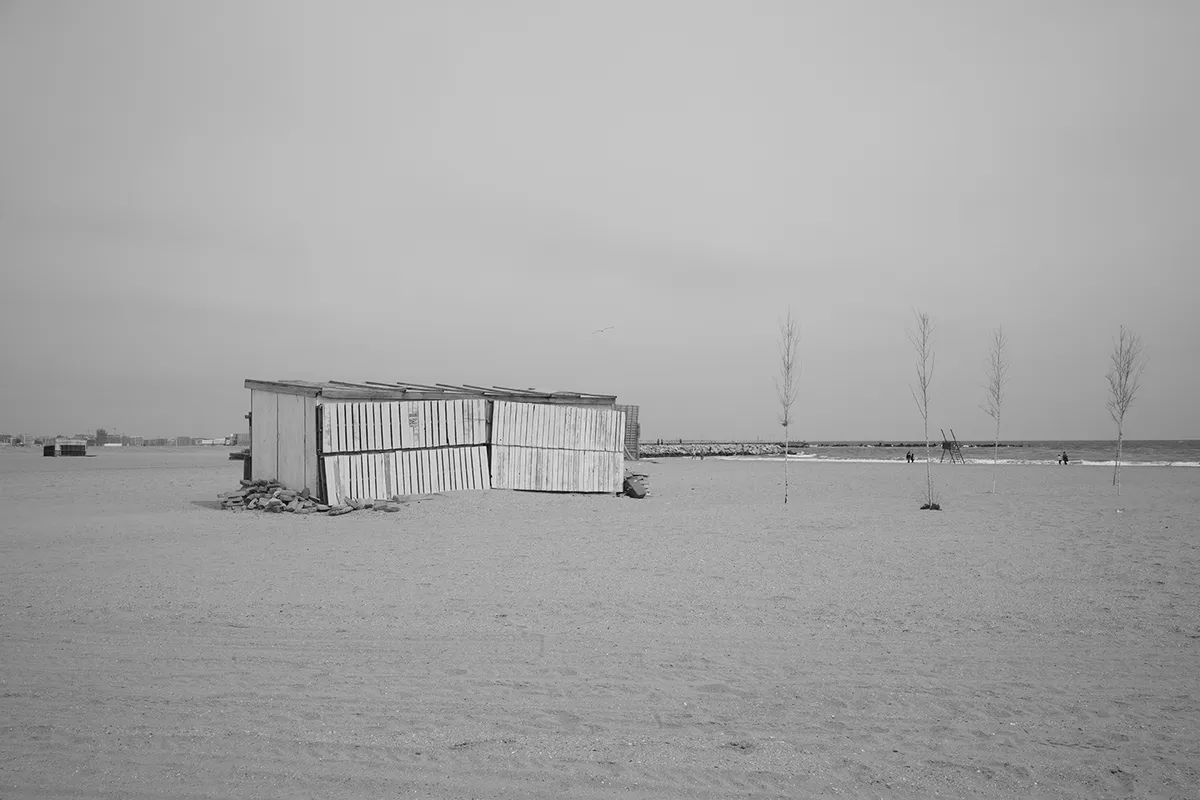
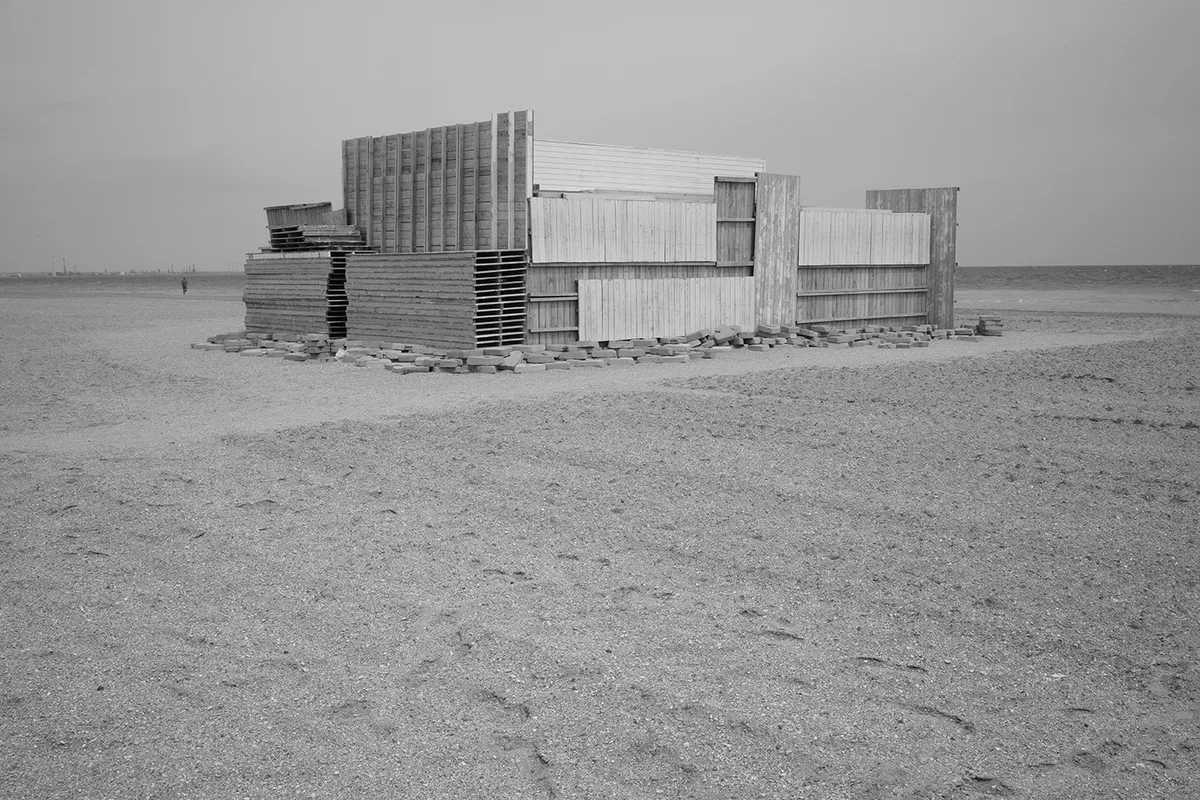
In an prolonged intermission underlined by the out of season calmness Mamaia seems to be reclaimed by the locals. The people of Constanța riding bikes and scooters take joy in the newly liberated promenades, individuals of all ages going for long strolls on the wide and empty beaches. From place to place, anchored into the sandy landscape, the compact silhouettes of beach bars, reed and wooden gazebos covered with decking sections, attract with their simplicity. Without all of the unnecessary elements, and with the distasteful details covered up, the lack of music from the loudspeakers accentuates the sound of the brize.
The reuse of materials induces an illusion of modularity, come the summer season and the shutter panels will transform themselves into deckings and pergolas, the tracks of excavators working on shy beach landscaping, all inspiring the sensation of a new beginning. The possibility of having the architecture of the environment integrated into a long term urban development strategy and the idea of renaturalization brought into light by the winning project of the international competition for the integrated plan on the sustainable development of the Mamaia beach indicate the good intentions of at least a certain sector of decision makers.