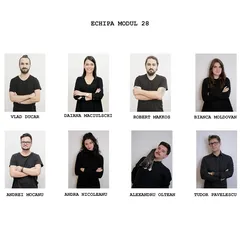
Modul 28 is an architecture and restoration workshop founded in 2017 in Sibiu, Romania. Our portfolio includes residential, commercial, and educational architecture projects, as well as a selection of restoration and repurposing interventions on medieval monuments in Transylvania.
Modul 28 represents a group of architects who collectively contribute to the development of a new architectural method and best practices in restoration. Their work focuses on carefully integrating new elements into existing structures, leading to a significant approach of producing architecture with various facets: from contemporary methods and materials to traditional woodworking techniques using saws for repairing a beam in a church attic.
Project description in English
The Adaptive Reuse program focuses on repurposing annex constructions within fortified churches in Transylvania for contemporary functions. This initiative, aimed at the long-term preservation of these buildings, began with the Fortified Church in Curciu.
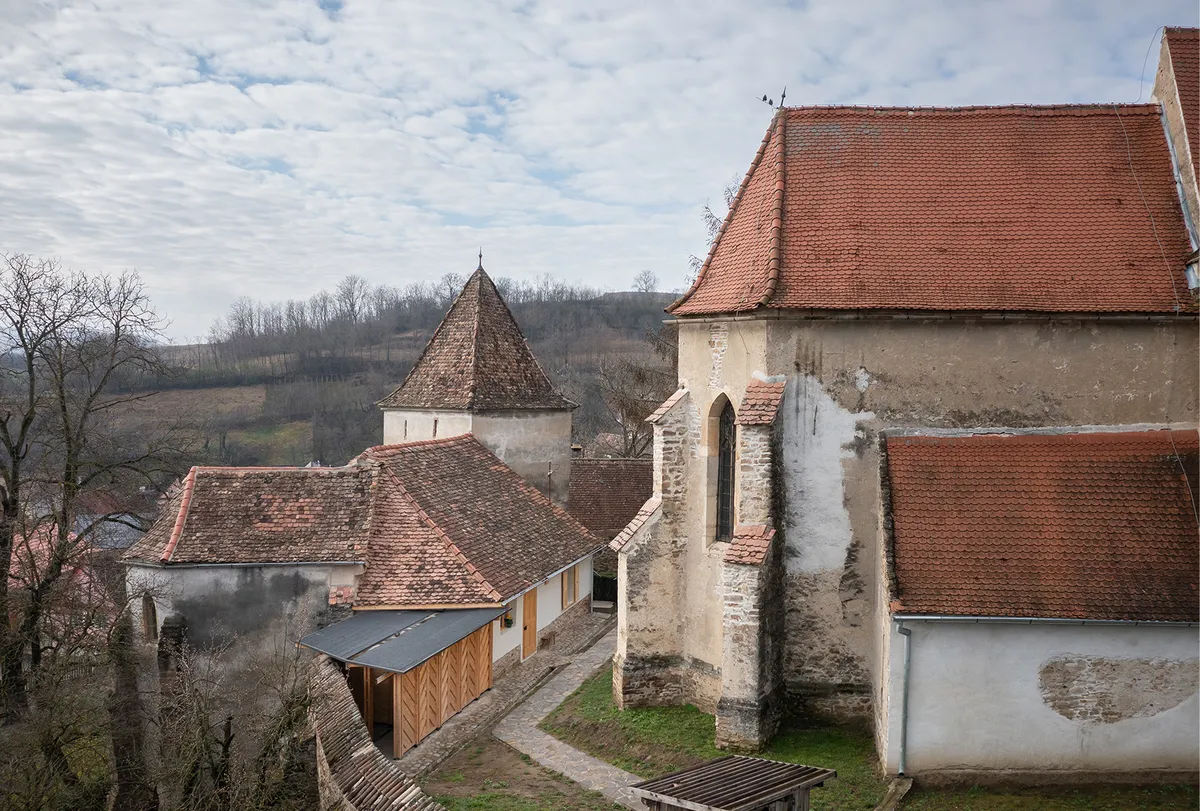
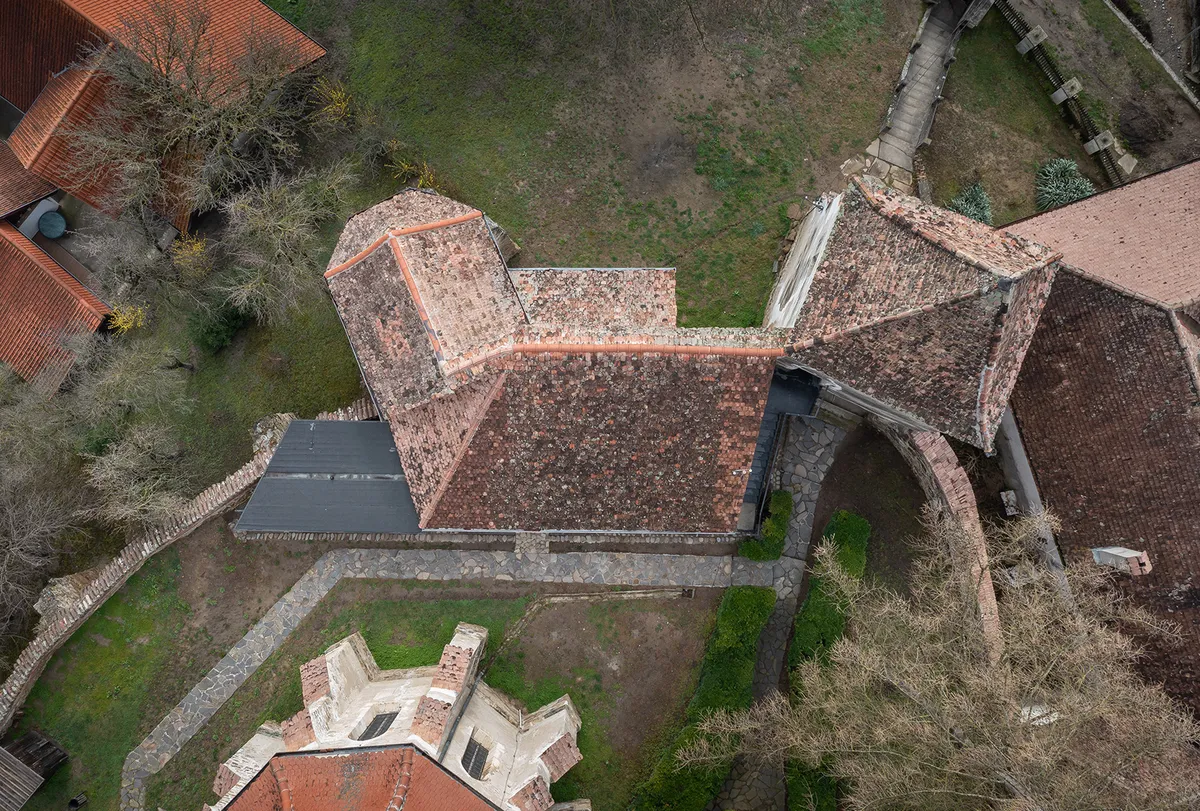
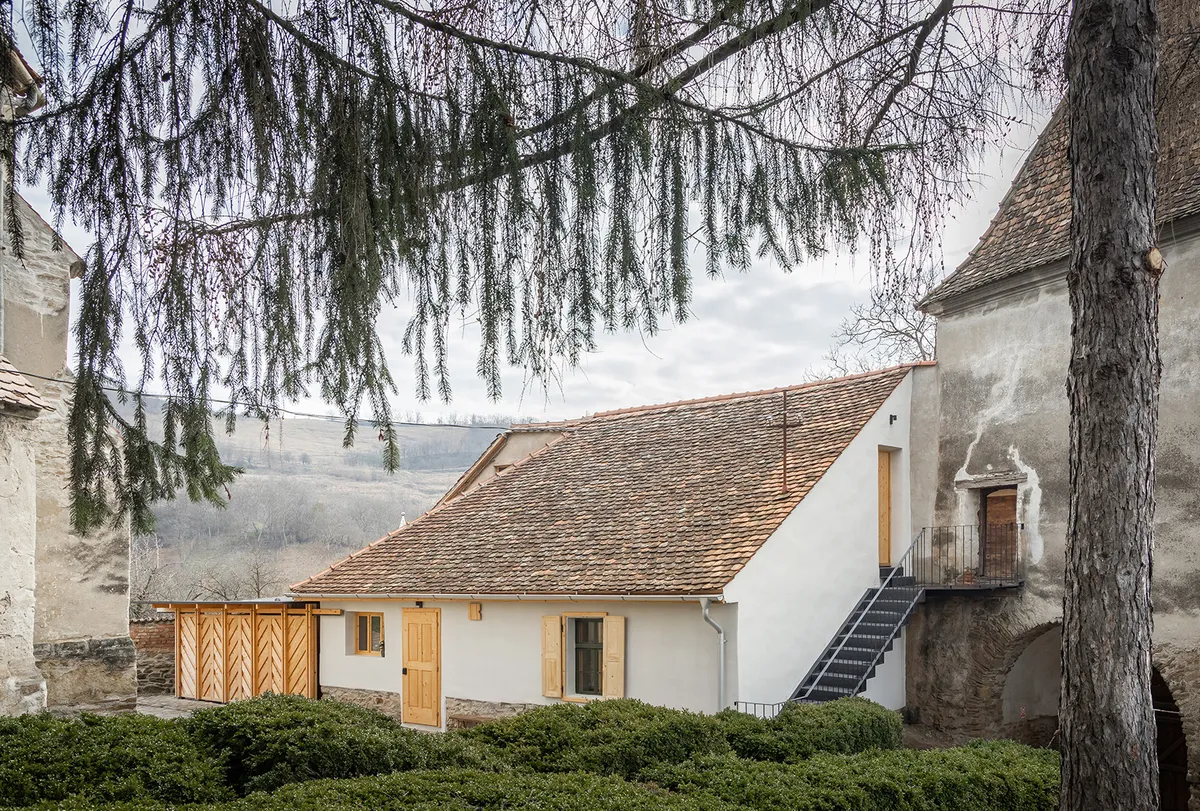
The Curciu ensemble includes a gate tower, a chapel, and a dwelling with two rooms, which currently lack specific functions. Only the church itself has been restored and is visitable. The remote location deters tourists due to the absence of nearby accommodation. However, the local community is committed to maintaining the monument, organizing events and educating visitors about its importance.
Our approach involves understanding the existing context, identifying valuable features, and deciding on interventions that either integrate seamlessly or highlight through contrast.
The main directions are conserving the existing structure and preserving its historical value. Artistic components, like the partially destroyed Gothic windows of the chapel, are treated rigorously to enhance their significance without obscuring them. We opted for a thin-profile frame to reconstruct the original design without substituting the original material, fulfilling technical requirements while preserving the historical value.
The reorganization of the interior space, necessary for contemporary facilities, respects the historical context by minimizing alterations to valuable spaces. We employ reversible techniques and natural materials compatible with the existing structures. Temporary partitions conceal utilities while maintaining the original orientation of the rooms.
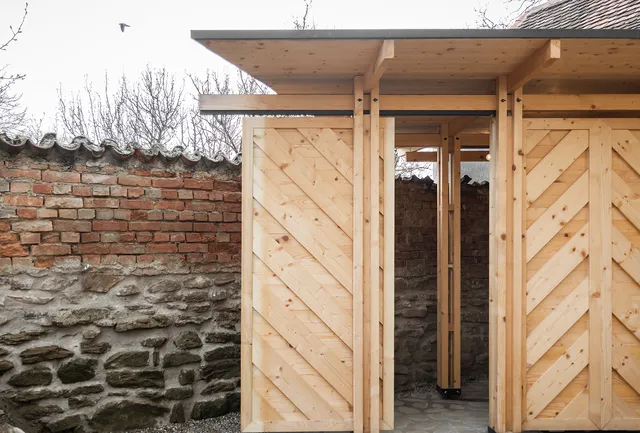
Increasing visitor numbers necessitates additional spaces. We propose a temporary wooden pavilion outside, integrated with the existing structure but standing out through contrast. This pavilion revitalizes the courtyard with an orthogonal structure that complements medieval masonry architecture.
Our interventions prioritize reversibility and use lightweight materials like wood and metal. This contemporary materiality contrasts with historical constructions, facilitating the ensemble's reintegration into the economic, social, and cultural life of the area. The result is a harmonious composition of historical and new architectural elements, achieving cultural and economic reactivation through thoughtful design.