Text de prezentare a autorului/biroului în limba engleză
Vlad Nancă (b. 1979, Bucharest) studied at the Department of Photography and Moving Image at the National University of Arts, Bucharest. His early work marked a fresh artistic perspective by employing DIY methods of production and self organisation and also helped bring together the young artist community in Bucharest.
In his early works, Vlad Nancă uses political and cultural symbols to explore nostalgia and the changes in society, set against the backdrop of Romania and Eastern Europe’s recent history and the rise of aggressive capitalism in the early 2000s.
In his recent work, Nancă explores space in various forms, from public space and architecture to outer space, consistently utilising archival material and references from art and architectural history to create unique subject matter materialising in sculptures and installations.
Descrierea proiectului în limba engleză
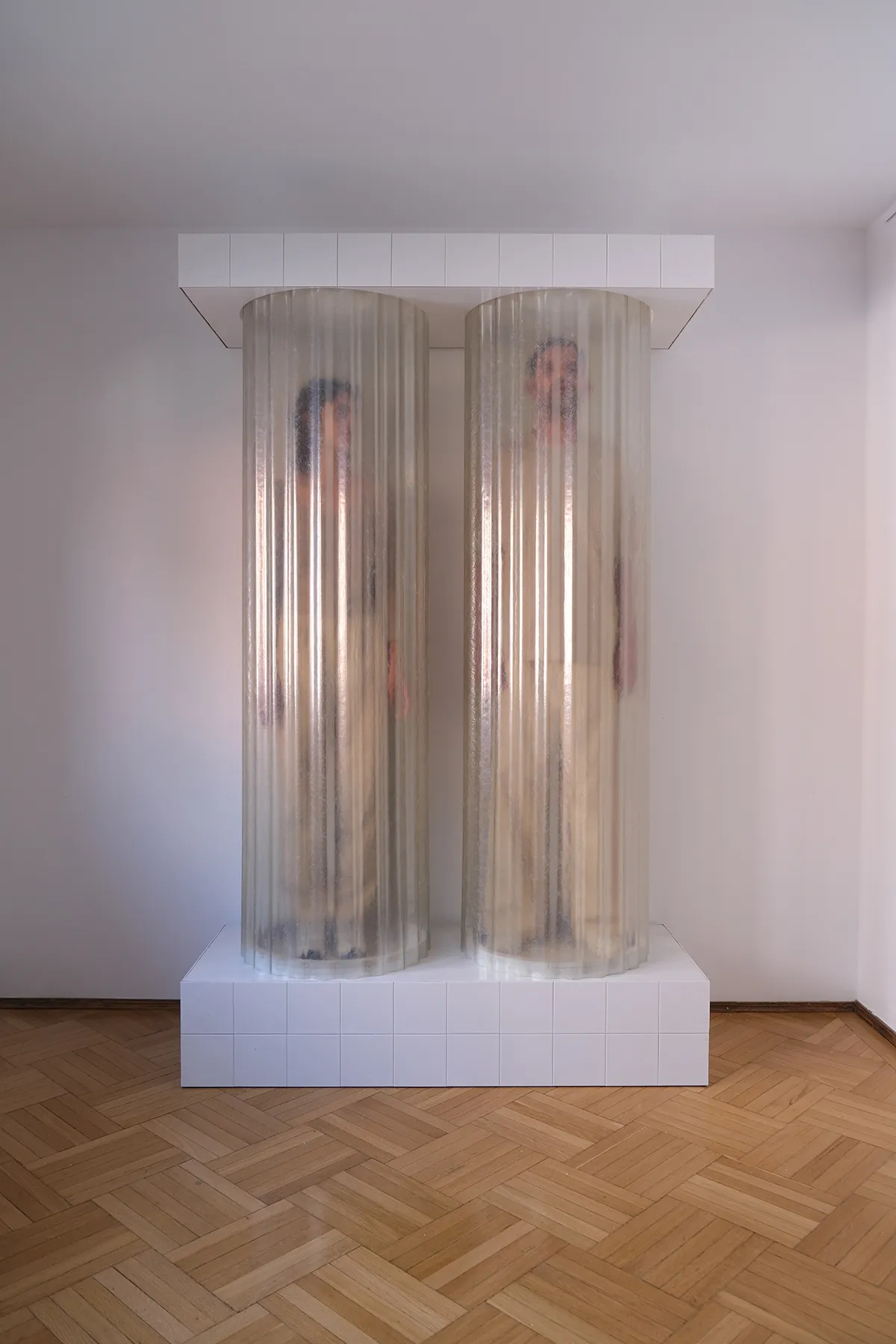
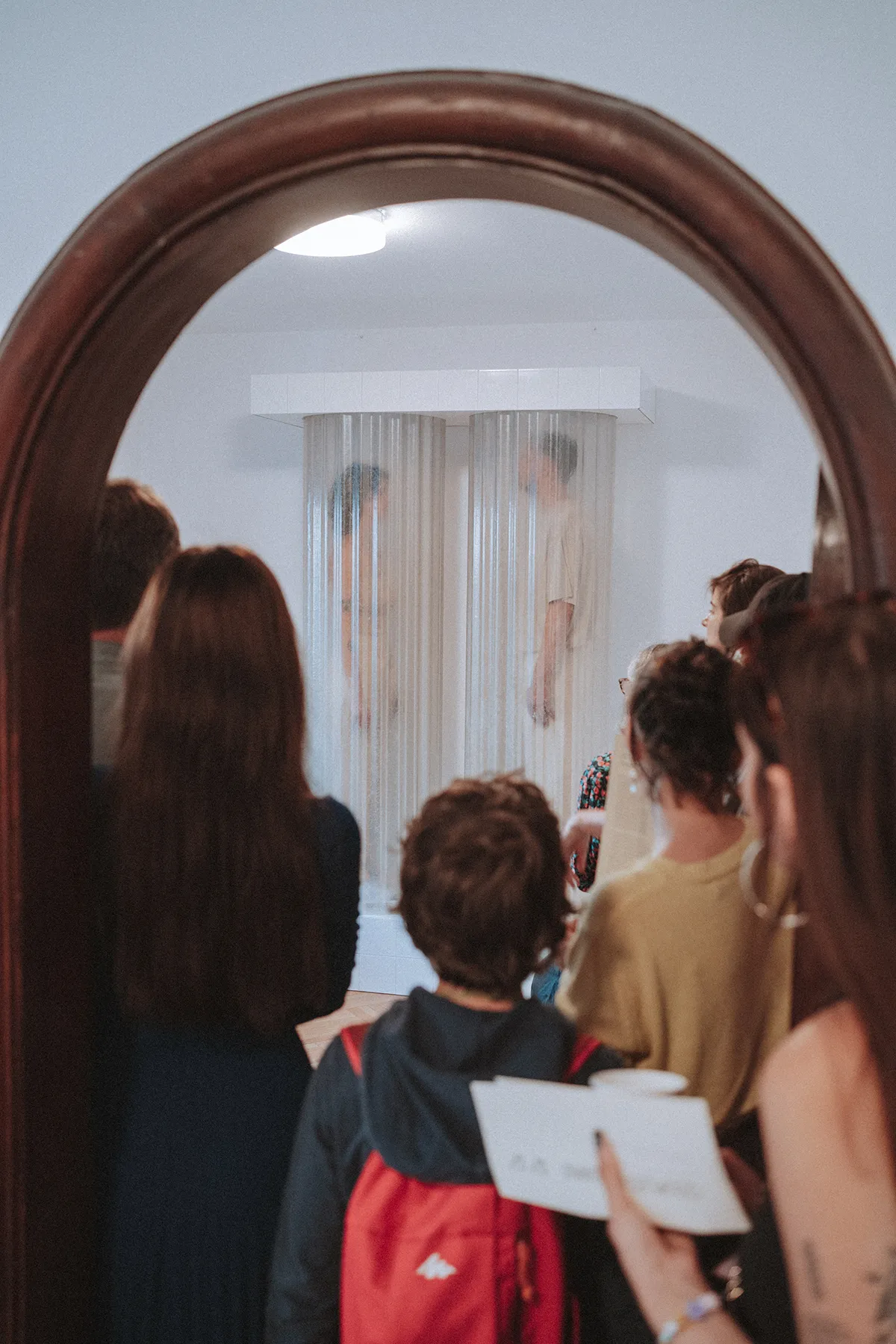
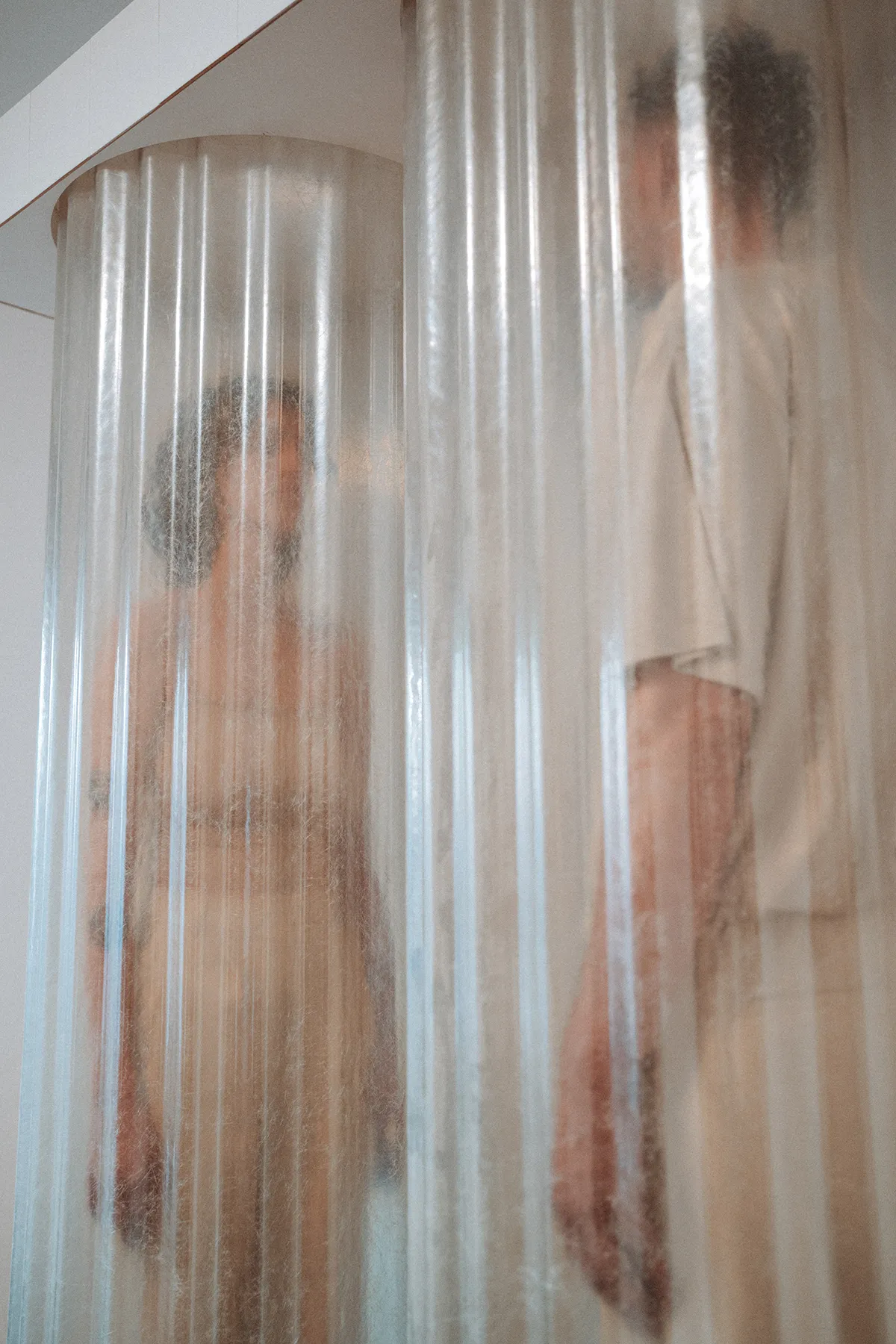
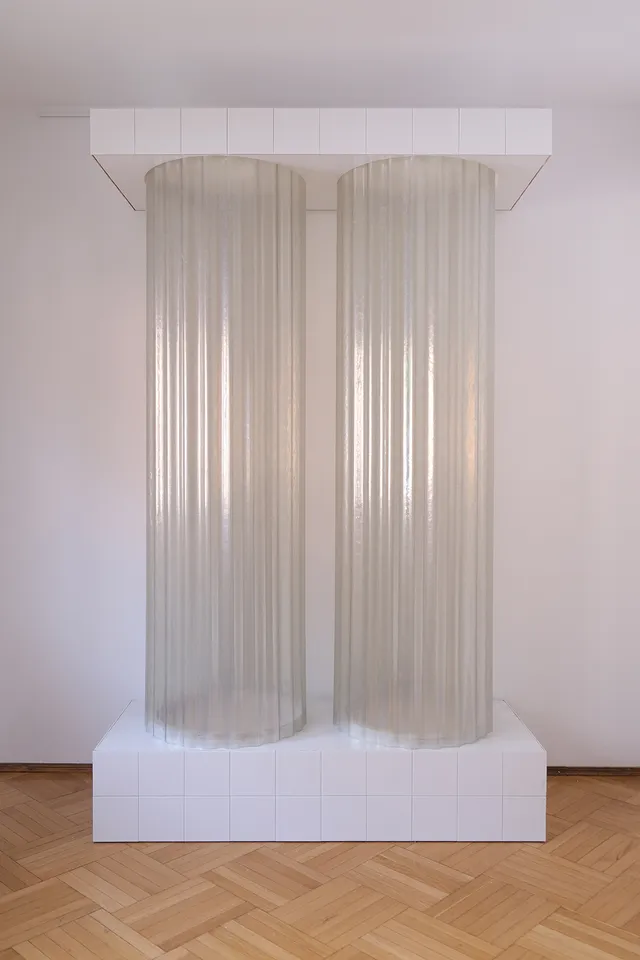
With the performative installation “Coupled Columns”, Vlad Nancă envisages a new relational imaginary emerging from the ruins of our deeply rooted ideas about the human body. While any notion of the body describes broad territories of meaning, in “Coupled Columns”, bodies refuse to be grasped as abstractions, ordered systems or embodiments of a regulatory ideal. Escaping rationalised love, measure, and proportion, they claim the burden of supporting and sharing a sensible world of structures and contracts which simultaneously bind and separate us. Ties between the human body and notions of order, beauty or symmetry have governed architectural thought for centuries, echoing in the customary metaphors of bodies as ordered systems or logically determined structures. The layout of the coupled columns is important to the matter of structural logic. Throughout the history of rejecting mystification and pursuing architecture scientifically, the coupled columns have emerged primarily from the advance of static experiments, with a scheme allowing for the bearing elements of a construction to carry a lighter load. However, within a classical colonnade, the coupled columns firstly appeared as a heresy. In the second half of the 17th century, in the backdrop of the cultural quarrel of the Ancient and the Moderns, this proposition was made by Claude Perrault (a member of the French Academy of Sciences) who challenged the fixed truths defended by the members of the French Academy of Architecture. He conceived a system of coupled columns against the rules of classical intercolumniation and, in spite of the static superiority of his proposition—which later brought him a great number of admirers—he initially faced resistance among those who defended true beauty and ideal proportion.
As with Vlad Nanca’s reflection upon our daily struggle to share and to hold, each of the coupled columns in Perrault’s scheme supports half the load which was initially designated for a single column, each entire column supporting half the weight of the architrave which originally rested on the half of a column.
Movement links the couple to a temporal dimension, allowing their bodies to be so in sync, so connected, while questioning our sense of individual self and mutual dependence.