ANDREESCU&GAIVORONSCHI is celebrating 34 years in the Romanian contemporary architecture. A series of projects and edificies obtained recognition. Among the over 60 national and international distinctions, the most important are: The European Award for Steel Construction ECCS in 1997; Nominated for The Mies van der Rohe EU Architecture Award, 2008, 2012; Shortlisted at WAF, Barcelona 2010, Berlin 2016; Winner at BIG SEE Architecture Festival Ljubljana 2019, 2020, 2021; President’s International Jury Saint Gobain Gyproc Trophy Prize 2021; Winner at GDA 2018, 2020; BETA Prizes in 2016 and 2018. Present on websites such as 1996, in Bucharest, Cluj-Napoca, Budapest, Leipzig, Thessaloniki, Szeged, Vienna, Istanbul, Brussels, Tokyo, Singapore, Berlin, Barcelona, Seoul, Frankfurt, Ljubljana, Novi Sad, etc.
Project description in English
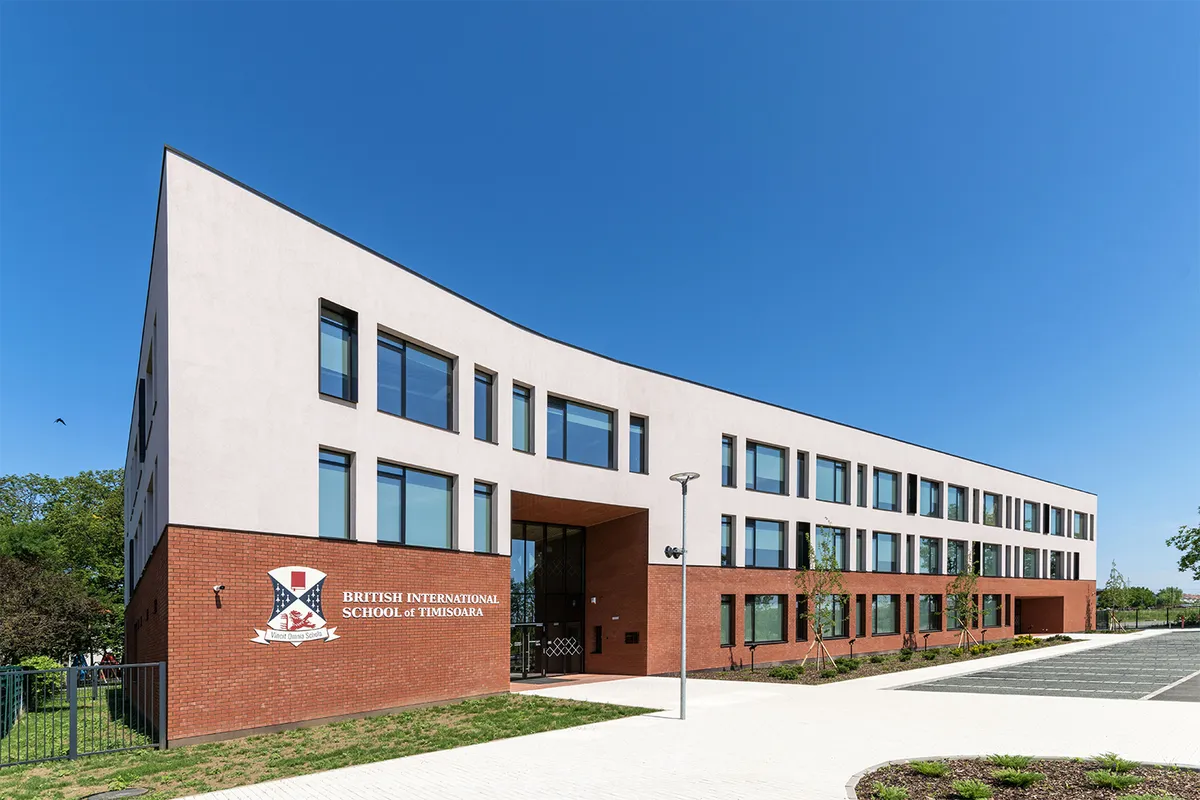
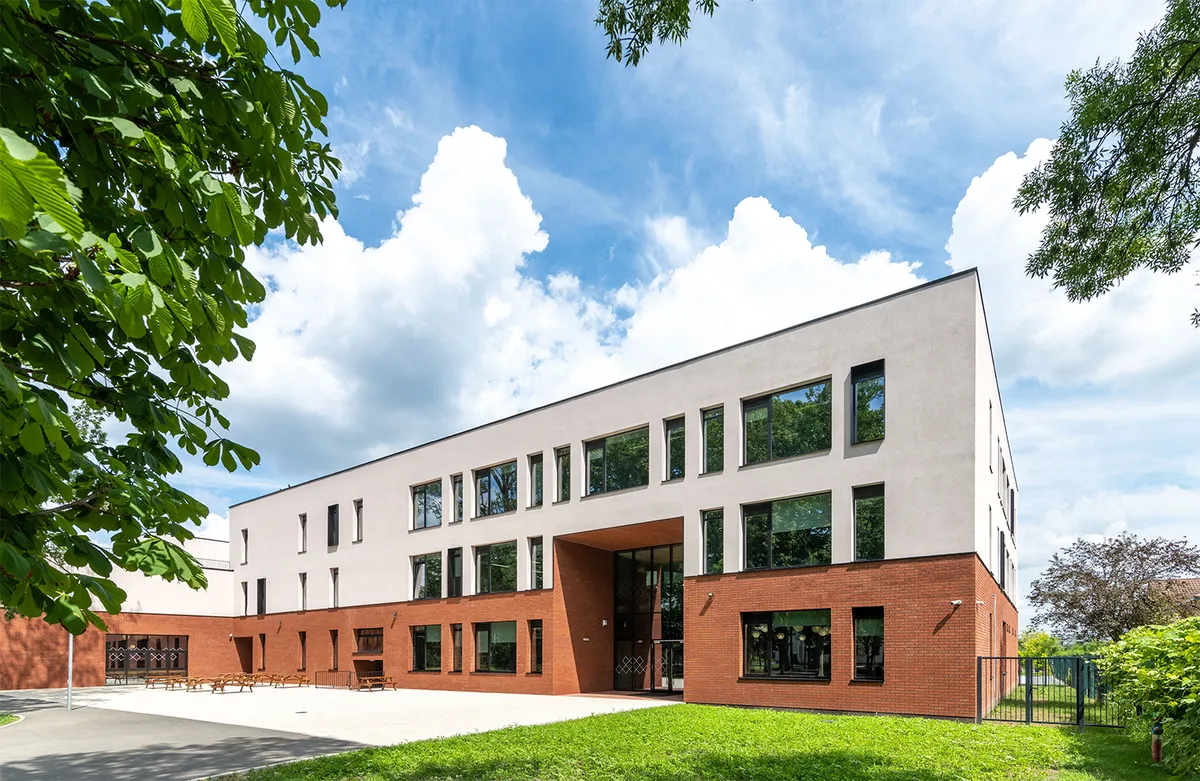
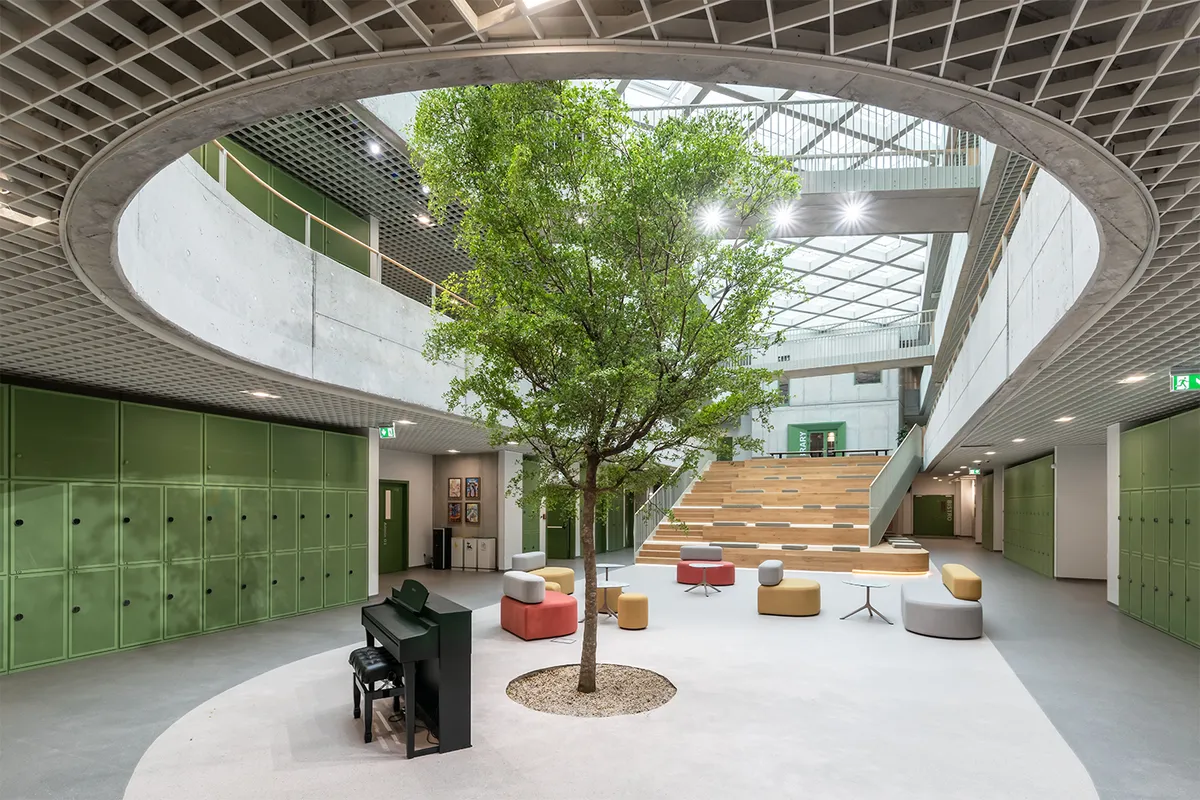
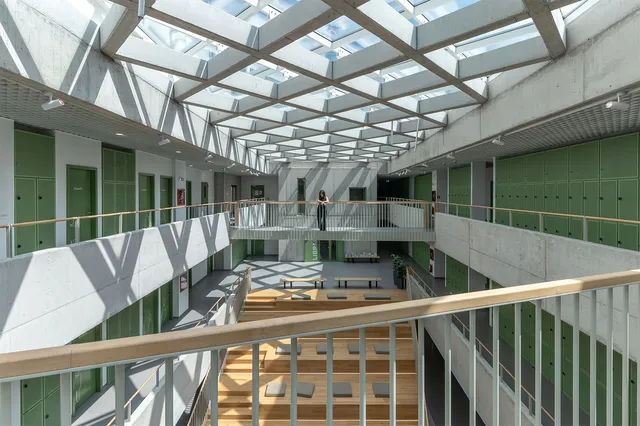
Located in Timişoara, the new high school building completes the British International School of Timişoara complex on its southeast side. Located in the north of the city, the complex gravitates around a magnificent park. The primary classes were already operating in an existing building, rehabilitated and refunctionalized. The new high school building is thought of as an access gate into the ensemble, a small inner city with a longitudinal axis and with an ascending topology towards the piano nobile library, with a "public square" and an amphitheater in the inner atrium. Art classrooms are located near the entrance. The canteen appears as a surprise, developing with a free double height oriented towards the ensemble's park. The library, one of the two anchors of the ascending longitudinal axis, is also developed on a double free height, with a second floor opening onto a generous terrace that oversees the park from above, at the level of the crowns of the trees. The second anchor of the longitudinal axis is constituted by the Bucida Buceras tree, planted inside the atrium, materializing the nature-culture dynamic in parallel with the library. Oblique perspectives, the play of light in the interior facilitated by the large skylight, the two suspended walkways from the 2nd floor level connecting the perimeter circulations of the classes, the multitude of niches and places intended for informal individual or collective study, and the interior tree generate a lively atmosphere, suitable for the open didactic process of the school. Concrete and apparent installations contribute to a relatively industrial image, while the interior-exterior contrast is generated by the simple, horizontal exterior volumetry with a slightly curved gate-facade, partially clad in klinker.