Text de prezentare a autorului/biroului în limba engleză
At Bánáti + Hartvig Architects design buildings that respect their environment and enhance the quality of their surroundings, respond to developing communities’ aspirations for the future, provide comfortable and healthy living and working spaces, and offer attractive venues for cultural and leisure activities.
Spurred by our commitment to sustainable development, in meeting our clients’ needs, we strive to create future-proof, environmentally friendly and likeable buildings.
Teamwork that builds on the creativity of all our designers provides the foundation of how our design community works. Collective thinking means that our knowledge, experience and values are not just aggregated but multiplied.
Our portfolio ranges from large-scale, complex projects to condominiums and detached houses requiring a personal touch, all designed as the outcome of a professional process to a high architectural quality.
Descrierea proiectului în limba engleză
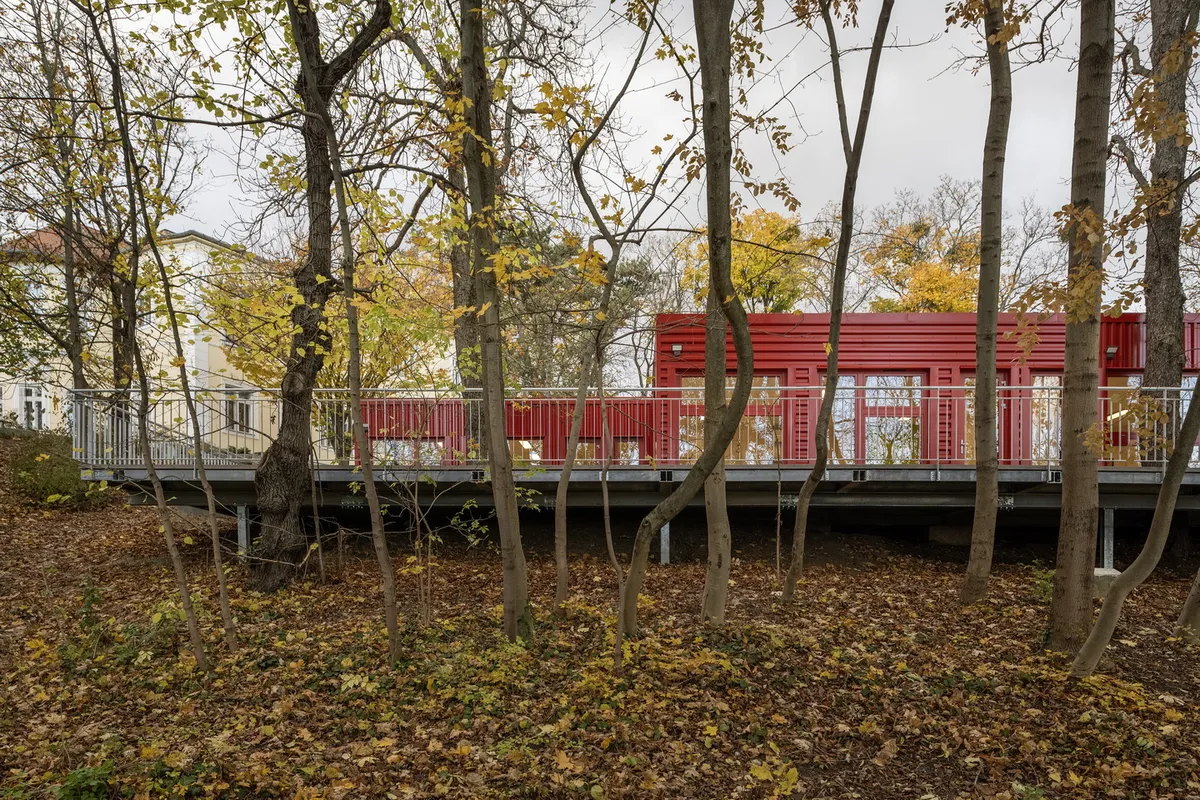
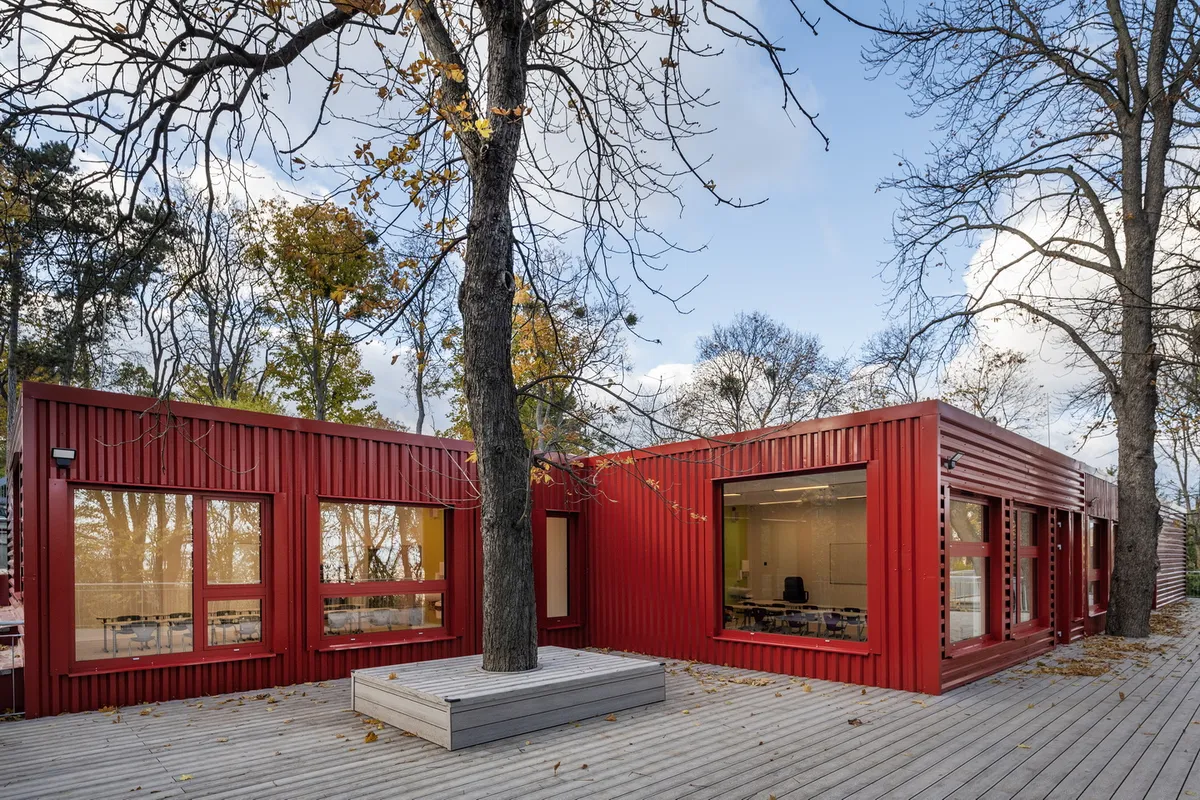
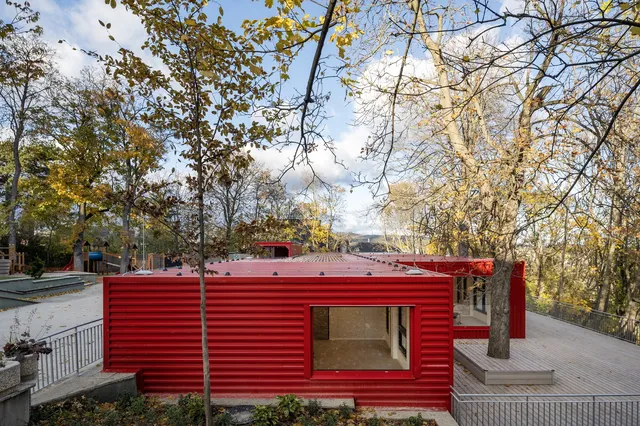
The need for expansion arose at the German School of Budapest. Due to the start of the school year, a rapid response was required. Therefore, the development of an existing container building to a higher quality, with increased capacity, and an architectural character befitting the built and natural environment was envisaged.
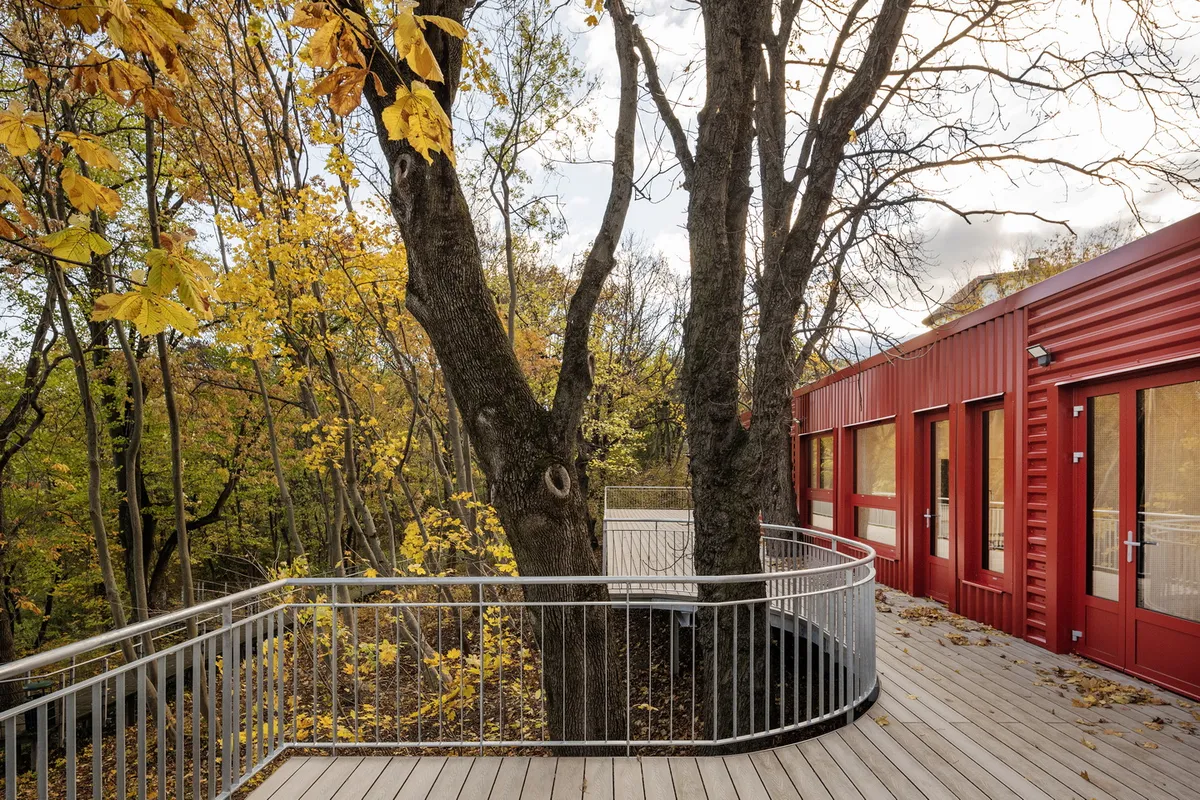
Surveying the surrounding trees to ensure that they were not threatened by the development was a major consideration in the design. Thus, the contour of the terrace follows the position of the trees.
How did creating the building become sustainable? The columns of the previous container building were used in the new structure, and its other elements were reused elsewhere. As only a minimal amount of concrete was needed for the construction, CO2 emissions were drastically reduced. The designers calculated that the amount of CO2 emitted by constructing a building with the same features out of reinforced concrete would have taken 101 trees 100 years to offset.